
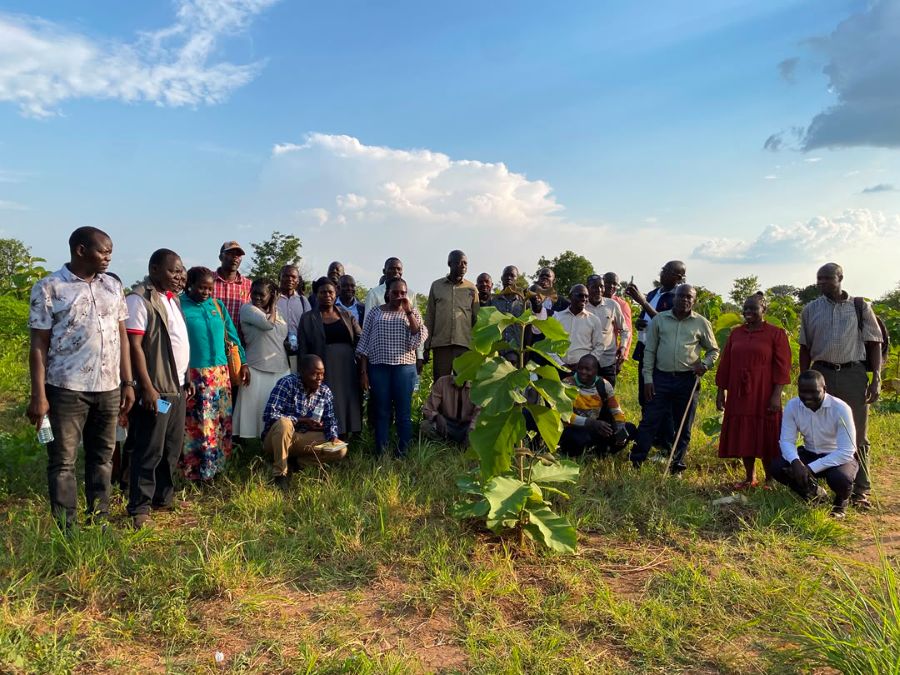
The Transformative Approach to Sustainable Landscapes and Livelihoods (TASLL) project has transitioned into a long-term conservation programme after completing its initial implementation phase in Northern Uganda.
The project, implemented by ECOTRUST, focused on restoring forests, improving household livelihoods and promoting sustainable land management in the Agoro-Agu landscape, covering Lamwo, Pader, Kitgum and Agago districts.
The initiative targeted the conservation of more than 65,548 hectares of natural forest and aimed to support the restoration of 15,000 hectares through the planting of six million native trees, including areas hosting refugee communities.
During a high-level stakeholder engagement to review the project’s achievements and sustainability plans, ECOTRUST said the end of funding support from the UK’s Foreign, Commonwealth & Development Office (FCDO) would not halt conservation activities.
Freddie Kalibwani, representing ECOTRUST, said the project was designed with a transition plan to ensure continuity beyond donor funding.
“The design of this project already anticipated its conclusion. We prepared for this exit strategy, and our message today is clear: we are ready. How do you exit a forestry project? You stay with your trees. We are going nowhere because the trees are right here,” Kalibwani said.
He said farmers supported under TASLL will now transition into ECOTRUST’s Trees for Global Benefit (TGB) programme, a long-term carbon restoration initiative.
“Projects may come and go, but we remain. We are committed to staying by the side of these households for another 25 years,” he added.
During its two-year implementation period, TASLL recorded several achievements, including digitally mapping 5,000 farmers, training 22 community tree nursery operators and planting 508,820 trees across the landscape.
The project promoted both indigenous tree species and economically valuable fruit trees, including jackfruit and avocado.
Through 45 community engagements, the initiative supported the planting of 416,488 native trees covering more than 1,041 hectares.
Digital monitoring of planted trees showed a survival success rate of 98.6 per cent among trees planted during the 2025 season.
Beyond environmental restoration, TASLL focused on improving household resilience through sustainable livelihoods and inclusive land-use planning.
Using Gender Action Learning Systems (GALS) approaches, the project trained 3,430 community members, including 2,227 men and 1,203 women, in collaborative decision-making and land management practices.
ECOTRUST said it is also developing alternative income-generating activities, including beekeeping and shea value chain enterprises, to provide communities with economic opportunities while they await long-term benefits from carbon projects.
Gerald Kairu, Head of Programmes at ECOTRUST, said the transition would ensure farmers continue receiving support.
“We are ensuring that the activities do not stop here; they continue. We are transitioning from the donor-funded FCDO project to the ECOTRUST-supported Trees for Global Benefit programme,” Kairu said.
He clarified that farmers entering the carbon programme sign carbon sales agreements rather than land ownership agreements.
“They sign carbon sales contracts, not land contracts,” he said.
Local governments in the region pledged to continue supporting the initiative by integrating sustainability plans into district development frameworks.
The project will work with district technical and political leaders, including Resident District Commissioners, Chief Administrative Officers, District Forest Officers, District Community Development Officers, local council leaders, the National Forestry Authority and the Ministry of Water and Environment.
Richard Ociti, Lamwo District Environmental Officer and project focal person, said the initiative had contributed to district development priorities, particularly in establishing woodlots and improving livelihoods.
“The milestones achieved so far are remarkable. Moving forward, our focus is to continue supporting beneficiary groups to ensure these benefits are sustained while empowering others to benefit from this initiative,” Ociti said.
Proscovia Kisembo, the project’s Regional Coordinator, thanked district leaders and communities for supporting farmer mobilisation, seedling distribution and tree monitoring since the programme began in 2024.
“We look forward to working with the leaders as we head towards the transition,” Kisembo said.
As part of the transition, ECOTRUST will close project offices in Agago, Lamwo and Pader to reduce operational costs while consolidating activities under its regional hub in Kitgum.
The organisation said the move will allow conservation efforts and community livelihood programmes to continue beyond the donor-funded phase.
